
Case Study Highlights
A petroleum-impacted commercial property in Kansas required groundwater remediation without significantly disrupting ongoing retail automotive sales and repair operations. The approximately 2.5-acre site was largely covered by buildings and asphalt, limiting opportunities for conventional excavation and natural oxygen infiltration.
The project combined targeted excavation with in situ chemical oxidation (ISCO), followed by in situ sorption and aerobic biodegradation. The sequential approach addressed remaining total petroleum hydrocarbons (TPH) while minimizing surface disturbance.
Remediation Approach and Technologies
The remediation program used groundwater monitoring and microbial analysis to evaluate treatment performance and guide the transition from chemical oxidation to enhanced biological treatment. Following the final treatment phase, TPH concentrations were reported as non-detect in both the low- and mid-range analyses at all monitoring wells sampled.
Project Benefits
Combining chemical oxidation with enhanced aerobic bioremediation and sorption provided a practical remediation approach for a petroleum-impacted property where extensive excavation was not desirable.
- Reduced Surface Disturbance: Targeted excavation and subsurface amendment delivery limited disruption to the active commercial property.
- Sequential Treatment: ISCO provided initial contaminant oxidation, followed by aerobic bioremediation and sorption to address remaining TPH.
- Rapid Groundwater Improvement: Following the final amendment application, groundwater TPH concentrations were non-detect in the low- and mid-range analyses.
- Sustained Treatment Mechanisms: Nutribind provided sorption of residual contaminants, with enhanced aerobic biodegradation intended to address hydrocarbons as they were released.
- Multiple Lines of Evidence: Groundwater chemistry, DIC carbon isotope measurements, and microbial sequencing helped evaluate contaminant degradation and treatment performance.
Project FAQs
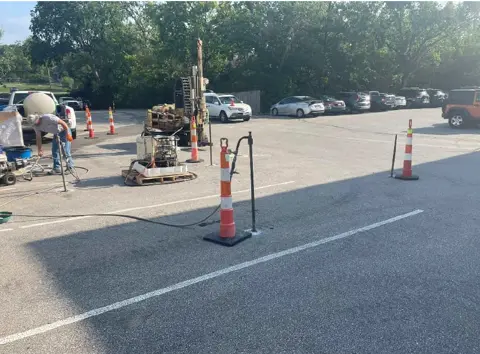
The project required treatment of petroleum-impacted groundwater while minimizing disruption to an operating commercial property. Base-activated persulfate was used for initial oxidation of TPH remaining after limited excavation. Enhanced aerobic bioremediation and sorption were subsequently applied to address residual hydrocarbons.
TersOx™ NPS was applied through an infiltration gallery and direct-push technology (DPT) injection points. Following ISCO treatment and performance monitoring, TersOx™ Liquid, TersOx™ Powder, TersOx™ Nutrients-QR, and NutriBind® HDPAC were injected through DPT points to promote aerobic biodegradation and sorption of remaining TPH.
The project used TPH concentration measurements, carbon isotope analysis of dissolved inorganic carbon (DIC δ¹³C), and next-generation sequencing (NGS) of microbial populations.
DIC isotope measurements provided evidence of hydrocarbon oxidation, while NGS helped characterize the microbial community and its response to treatment. Together, these measurements provided additional information beyond changes in contaminant concentrations alone.
Following application of the enhanced aerobic amendments, groundwater samples collected from all monitoring wells showed non-detect TPH concentrations in both the low- and mid-range analyses.
The project demonstrated how sequential ISCO, enhanced aerobic bioremediation, and sorption could be applied at an active commercial property with limited surface disturbance.
Project Snapshot
Location: Kansas
Contaminants: Petroleum hydrocarbons
Remediation Technologies: ISCO and In Situ Sorption & Biodegradation
Key Amendments: TersOx™ NPS, TersOx™ Liquid, TersOx™ Powder, TersOx™ Nutrients-QR, and NutriBind® HDPAC
Performance Monitoring: VOC analyses, CSIA, and microbial gene assays (qPCR)
