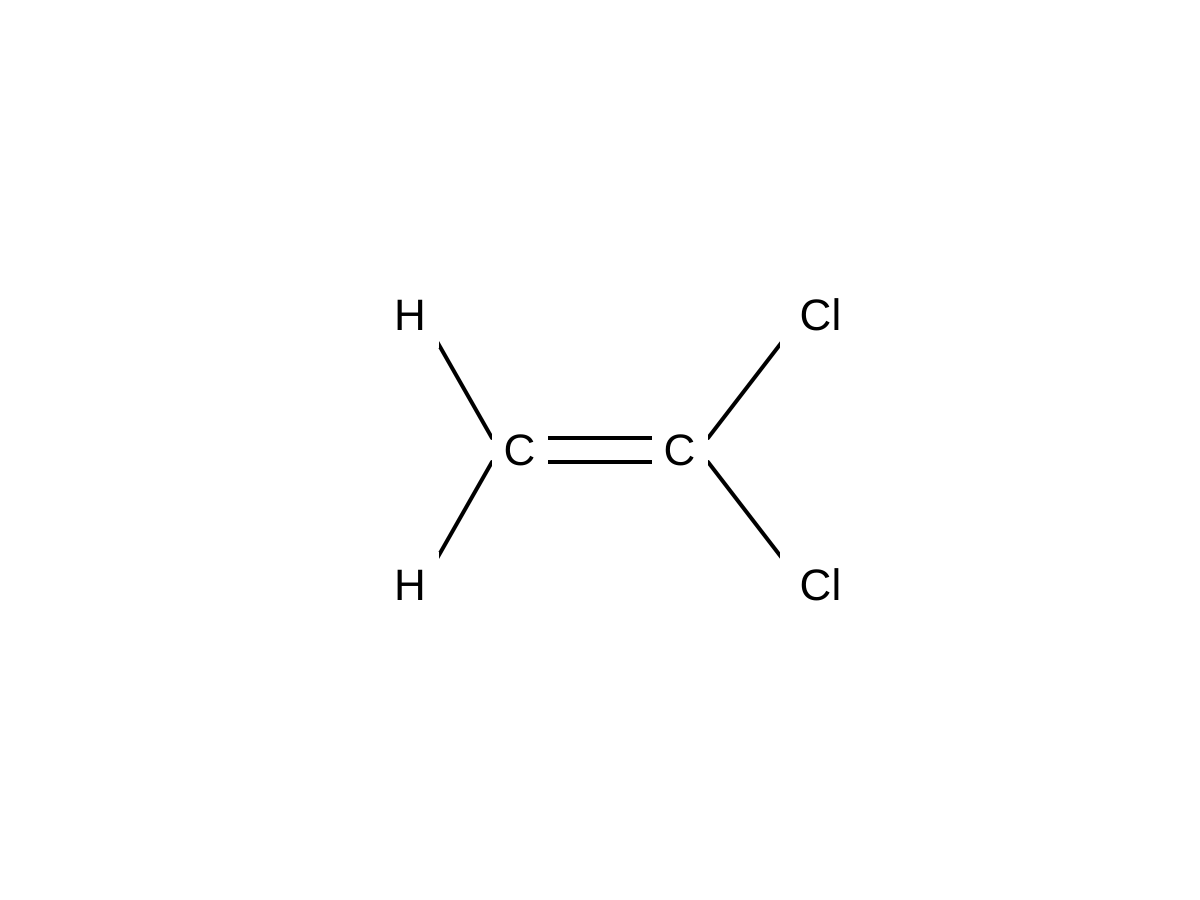
Chemical Properties
1,1-Dichloroethene is denser than water and, when present as a separate liquid phase, is classified as a Dense Non-Aqueous Phase Liquid (DNAPL). It is also highly volatile and moderately soluble in water.
| Property |
Value |
| Chemical Name |
1,1-Dichloroethene |
| Common Name |
1,1-DCE; Vinylidene Chloride |
| Chemical Formula |
C₂H₂Cl₂ |
| CAS Number |
75-35-4 |
| Molecular Weight |
96.94 g/mol |
| Density |
Approximately 1.21 g/cm³ at 20°C |
| Solubility in Water |
Approximately 2,500 mg/L at 25°C |
EPA reports a specific gravity of approximately 1.213 at 20°C, water solubility of approximately 2.5 g/L at 25°C, and a vapor pressure of 591 mm Hg at 25°C, indicating that 1,1-DCE is highly volatile.
Common Sources of 1,1-Dichloroethene
1,1-Dichloroethene may be present due to:
- Chemical manufacturing operations
- Production of polymers and synthetic resins
- Industrial solvent handling
- Metal cleaning and degreasing operations involving related chlorinated solvents
- Hazardous waste disposal
- Releases from chemical storage tanks or process equipment
- Degradation of related chlorinated solvents
- Former industrial facilities where chlorinated VOCs were used or disposed of
At chlorinated solvent sites, 1,1-DCE may be encountered with other compounds such as 1,1,1-trichloroethane, 1,1-dichloroethane, trichloroethene, and other chlorinated VOCs.
Environmental Concerns
1,1-Dichloroethene is of environmental concern because it is highly volatile, mobile in groundwater, and capable of migrating from contaminated soil and groundwater into soil gas.
Its relatively low soil sorption means that dissolved 1,1-DCE can move with groundwater and form plumes extending beyond the original source area. EPA reports an estimated soil sorption coefficient (Koc) of approximately 150, indicating limited to moderate retardation in many aquifer materials.
1,1-DCE may also occur as a degradation product of other chlorinated compounds. Therefore, changes in 1,1-DCE concentrations can be important when evaluating natural attenuation or active remediation of mixed chlorinated-solvent plumes.
Biodegradation may occur under appropriate aerobic or anaerobic conditions, although rates and pathways depend strongly on site-specific microbial populations and geochemistry.
Behavior in Soil and Groundwater
1,1-Dichloroethene contamination may exist as:
- Separate-phase DNAPL
- Dissolved contamination in groundwater
- Sorbed contamination associated with soil and aquifer materials
- Vapor-phase contamination within the vadose zone
- A transformation product of other chlorinated VOCs
Because pure 1,1-DCE is denser than water, significant releases may migrate downward through permeable soil and aquifer materials. However, because it is also highly volatile and moderately soluble, a substantial portion of released mass may partition into groundwater or soil gas.
Once dissolved, 1,1-DCE can migrate with groundwater. Its relatively low tendency to sorb strongly to soil means plume migration may be significant under favorable hydrogeologic conditions.
Its high vapor pressure also promotes partitioning into soil gas, making vapor intrusion an important consideration where contaminated groundwater or soil is present beneath or near occupied buildings.
Human Health Effects
Exposure to elevated concentrations of 1,1-Dichloroethene may affect the:
- Liver
- Kidneys
- Upper respiratory tract
- Developing fetus
EPA identifies liver effects as a concern following acute exposure and notes that chronic exposure above the drinking-water standard may cause liver and kidney damage and developmental toxicity.
ATSDR identifies upper respiratory tract toxicity, liver toxicity, and kidney toxicity as presumed human health effects based on the available toxicological evidence.
Short-term exposure to sufficiently high vapor concentrations may also cause irritation and other effects associated with exposure to volatile chlorinated solvents.
Regulatory Standards
Regulatory criteria vary by jurisdiction; however, the United States Environmental Protection Agency has established a Maximum Contaminant Level (MCL) for 1,1-dichloroethene in drinking water of 0.007 mg/L (7 µg/L).
EPA has also established an MCL Goal (MCLG) of 0.007 mg/L (7 µg/L).
Many states have additional groundwater, soil, soil gas, vapor intrusion, and risk-based screening criteria for 1,1-dichloroethene.