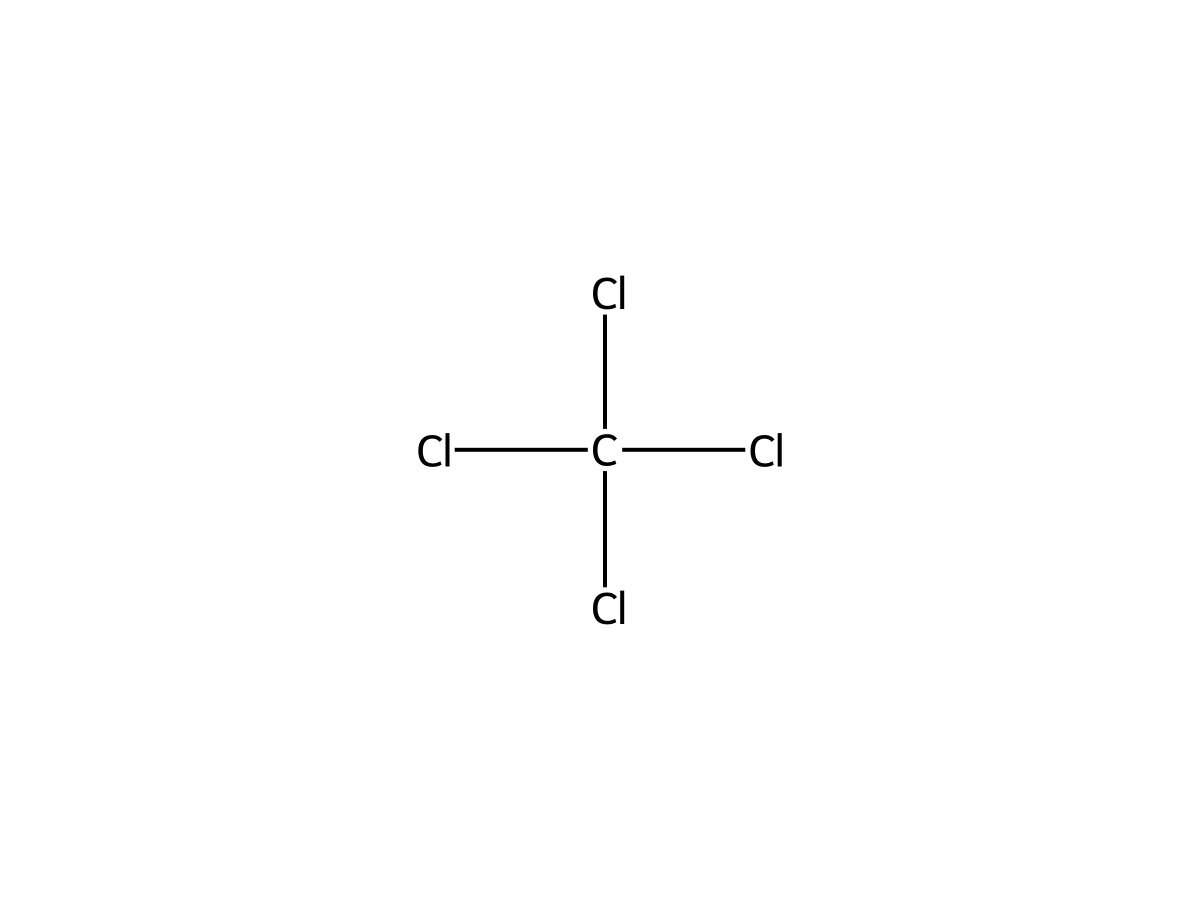
Chemical Properties
Carbon tetrachloride is substantially denser than water and, when present as a separate liquid phase, is classified as a Dense Non-Aqueous Phase Liquid (DNAPL). Its high density allows free-phase product to migrate downward through the saturated zone.
| Property |
Value |
| Chemical Name |
Carbon Tetrachloride |
| Common Name |
Carbon Tetrachloride |
| Chemical Formula |
CCl₄ |
| CAS Number |
56-23-5 |
| Molecular Weight |
153.82 g/mol |
| Density |
Approximately 1.59 g/cm³ |
| Solubility in Water |
Approximately 800 mg/L at 25°C |
Carbon tetrachloride is only moderately soluble in water compared with many other volatile organic compounds, but its solubility is sufficient to generate significant dissolved groundwater plumes following releases.
Common Sources of Carbon Tetrachloride
Carbon tetrachloride may be present due to:
- Historical metal cleaning and degreasing operations
- Chemical manufacturing facilities
- Production of refrigerants and chlorinated chemicals
- Former use in fire extinguishers
- Former pesticide and fumigant applications
- Dry cleaning and solvent-handling operations
- Hazardous waste disposal areas
- Spills or leaks from chemical storage tanks and piping
Many historical direct consumer uses were discontinued because of health concerns, while current uses are primarily associated with chemical manufacturing.
Environmental Concerns
Carbon tetrachloride is of particular environmental concern because it can form persistent DNAPL source areas and dissolved groundwater plumes.
Because it is denser than water, free-phase carbon tetrachloride may migrate vertically through permeable soils and aquifer materials until it encounters lower-permeability layers. Residual DNAPL trapped within the subsurface may continue dissolving into groundwater for many years.
Under anaerobic conditions, carbon tetrachloride may undergo reductive transformation through sequential dechlorination pathways. Potential transformation products include chloroform, dichloromethane, chloromethane, and ultimately less-chlorinated or nonchlorinated end products.
These daughter products are themselves regulated contaminants, so remediation programs should generally monitor both carbon tetrachloride and its potential degradation products when evaluating treatment performance.
Behavior in Soil and Groundwater
Carbon tetrachloride contamination may exist as:
- Separate-phase DNAPL
- Dissolved contamination in groundwater
- Residual contamination trapped within soil and aquifer pores
- Sorbed contamination associated with soil organic matter
- Vapor-phase contamination within the vadose zone
Because carbon tetrachloride is dense and relatively mobile as a nonaqueous liquid, releases may penetrate well below the water table and migrate through preferential pathways such as fractures, sand lenses, and other permeable zones.
Once dissolved, carbon tetrachloride can migrate with groundwater and form extensive plumes. Persistent DNAPL source zones may continue releasing dissolved contaminant mass even after the original release has stopped.
Carbon tetrachloride is also volatile and can partition from contaminated soil and groundwater into soil gas, creating potential vapor intrusion concerns where contamination occurs beneath or near occupied buildings.
Human Health Effects
Exposure to elevated concentrations of carbon tetrachloride may affect the:
- Liver
- Kidneys
- Central nervous system
- Respiratory system
The liver is considered one of the primary target organs for carbon tetrachloride toxicity. Short-term exposure to high concentrations may cause dizziness, headache, nausea, vomiting, and central nervous system depression.
Long-term exposure may result in liver damage and is also associated with increased cancer risk. EPA currently identifies carbon tetrachloride as presenting significant human-health concerns, including chronic liver toxicity and cancer risk.
Regulatory Standards
Regulatory criteria vary by jurisdiction; however, the United States Environmental Protection Agency has established a Maximum Contaminant Level (MCL) for carbon tetrachloride in drinking water of 0.005 mg/L (5 µg/L).
EPA has established an MCL Goal (MCLG) of zero and identifies liver problems and increased cancer risk as potential health effects associated with long-term exposure above the MCL.
Many states have additional groundwater, soil, soil gas, vapor intrusion, and risk-based screening criteria for carbon tetrachloride.
Frequently Asked Questions
What was carbon tetrachloride commonly used for?
Carbon tetrachloride was historically used as a cleaning and degreasing solvent, fire-extinguishing agent, fumigant, refrigerant-related chemical, and chemical manufacturing intermediate. Many of these uses have been discontinued or restricted because of its toxicity and environmental persistence.
Is carbon tetrachloride a DNAPL?
Yes. Pure carbon tetrachloride is denser than water and is classified as a Dense Non-Aqueous Phase Liquid (DNAPL). Significant releases can migrate below the water table and accumulate in lower-permeability zones, creating long-term sources of dissolved groundwater contamination.
Can carbon tetrachloride biodegrade naturally?
Yes. Under sufficiently reducing conditions, carbon tetrachloride may undergo anaerobic reductive transformation. Degradation can produce chloroform and, with further dechlorination, dichloromethane and chloromethane. The rate and extent of degradation depend on site-specific geochemistry and microbial populations.
What are the main daughter products of carbon tetrachloride degradation?
Carbon tetrachloride may be sequentially transformed to chloroform, dichloromethane, and chloromethane under anaerobic conditions. Because these compounds are also regulated contaminants, monitoring should evaluate the entire degradation pathway rather than carbon tetrachloride alone.
How is carbon tetrachloride removed from groundwater?
Tersus supports several approaches for carbon tetrachloride remediation, including enhanced anaerobic bioremediation, in-situ chemical reduction, zero-valent iron-based treatment, in-situ chemical oxidation where appropriate, and source-area treatment. Treatment selection depends on contaminant concentrations, DNAPL presence, groundwater geochemistry, geology, and cleanup objectives.
Can carbon tetrachloride contribute to vapor intrusion?
Yes. Carbon tetrachloride is volatile and can partition from contaminated soil and groundwater into soil gas. Vapor intrusion may therefore be an important concern where affected soil or groundwater is located beneath or near occupied buildings.
Related Contaminants
- Chloroform
- Dichloromethane
- Chloromethane
- Tetrachloroethene (PCE)
- Trichloroethene (TCE)
- 1,1,1-Trichloroethane (1,1,1-TCA)
- 1,1,2-Trichloroethane (1,1,2-TCA)
- 1,2-Dichloroethane (1,2-DCA)