
Chlorobenzene
What is Chlorobenzene?
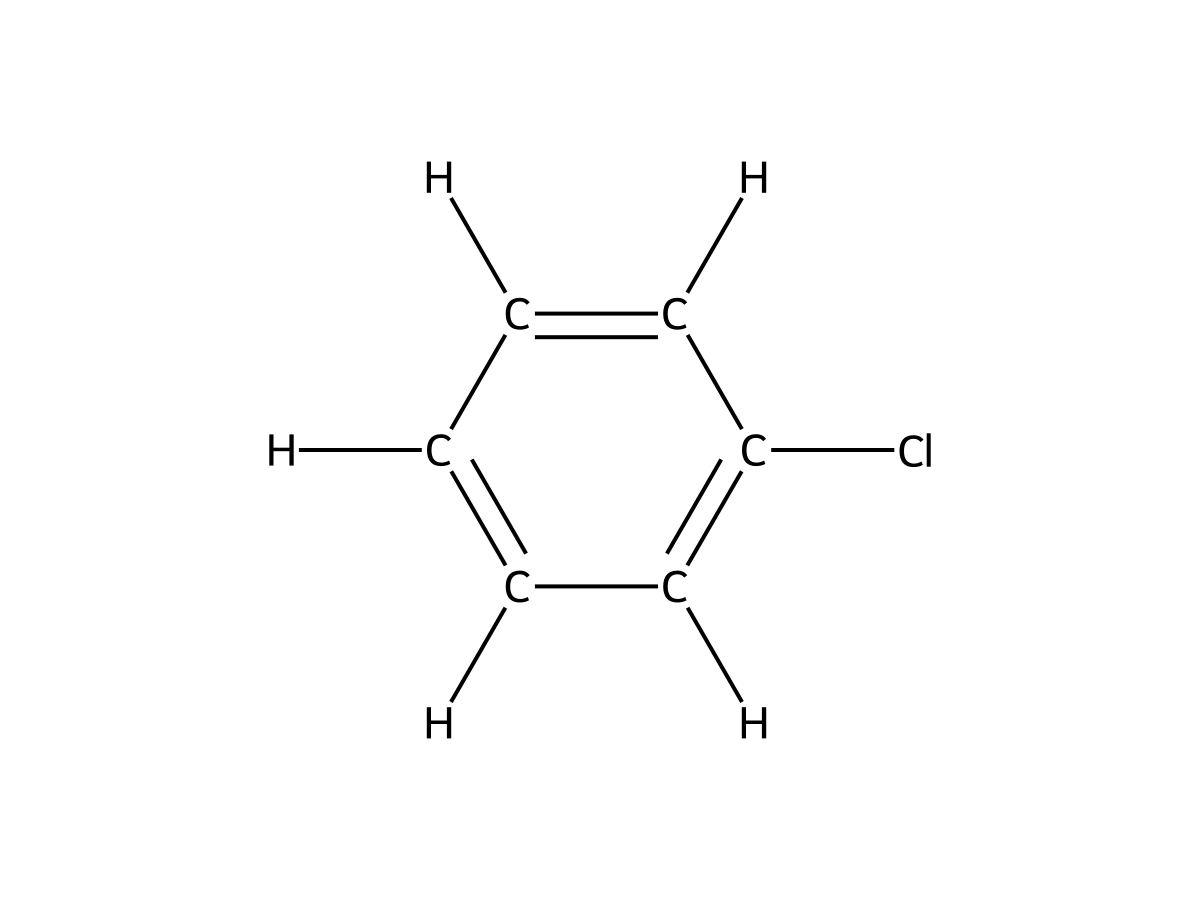
Chlorobenzene is a chlorinated aromatic organic compound consisting of a benzene ring with one chlorine atom attached. It is a colorless, flammable liquid with an aromatic odor and is used primarily as a solvent and as a chemical intermediate in the manufacture of other products.
Chlorobenzene does not occur naturally in the environment. Environmental releases are generally associated with chemical manufacturing, solvent use, industrial facilities, and hazardous waste sites.
Because chlorobenzene is both volatile and moderately persistent under some subsurface conditions, releases may affect soil, groundwater, and soil gas.
How Tersus Can Help with Chlorobenzene
Tersus Environmental provides several technologies that can be used to address chlorobenzene in soil and groundwater. Treatment selection depends on site geochemistry, contaminant distribution, source conditions, and remediation objectives.
Commonly utilized products include:
Sequential Treatment Strategy
For sites where chlorobenzene is treated through reductive dechlorination, Tersus may evaluate a phased or spatially separated treatment approach:
- Reductive Dechlorination Stage – EDS-ER™: Establish strongly reducing conditions and provide fermentable organic substrate to promote reductive dechlorination of chlorobenzene to benzene.
- Benzene Biodegradation Stage – Nutrisulfate®: After chlorobenzene transformation has progressed, provide sulfate to support anaerobic oxidation of the resulting benzene.
The two amendments should be applied with consideration of site-specific geochemistry and electron balance. Introducing a large concentration of readily fermentable electron donor together with sulfate can stimulate sulfate reduction using the amendment itself, potentially consuming sulfate that would otherwise be available for benzene oxidation. Staging the amendments in time or separating the treatment zones spatially can improve utilization of each amendment for its intended process.
Chemical Properties
Chlorobenzene is denser than water and is classified as a Dense Non-Aqueous Phase Liquid (DNAPL) when present as a separate liquid phase. Its density is approximately 1.11 g/cm³ at 20°C.
| Property | Value |
|---|---|
| Chemical Name | Chlorobenzene |
| Common Name | Monochlorobenzene |
| Chemical Formula | C₆H₅Cl |
| CAS Number | 108-90-7 |
| Molecular Weight | 112.55 g/mol |
| Density | Approximately 1.11 g/cm³ at 20°C |
| Solubility in Water | Approximately 500 mg/L at 25°C |
Common Sources of Chlorobenzene
Chlorobenzene may be present due to:
- Chemical manufacturing operations
- Use as an industrial solvent
- Production of pesticides and agricultural chemicals
- Manufacture of dyes and other chemical intermediates
- Degreasing and cleaning operations
- Releases from hazardous waste sites
- Improper storage or disposal of chlorinated solvents and chemicals
Historically, chlorobenzene was also used in the manufacture of chemicals such as phenol and DDT. Current uses include solvent applications and production of other chemical intermediates.
Environmental Concerns
Chlorobenzene is of environmental concern because it can contaminate soil, groundwater, and soil gas following industrial releases.
Unlike chlorinated ethenes such as PCE and TCE, chlorobenzene contains chlorine attached directly to an aromatic benzene ring. Its biodegradation pathways are therefore different from those typically associated with reductive dechlorination of chlorinated ethenes.
Under appropriate anaerobic conditions, chlorobenzene may undergo reductive dehalogenation, resulting in removal of the chlorine atom and formation of benzene. Because benzene is itself a regulated contaminant, treatment programs should consider both chlorobenzene destruction and the subsequent biodegradation of benzene.
Aerobic biodegradation of chlorobenzene can also occur under suitable conditions, although rates depend on site-specific microbial populations, contaminant concentrations, and geochemistry.
Behavior in Soil and Groundwater
Chlorobenzene contamination may exist as:
- Separate-phase DNAPL
- Dissolved contamination in groundwater
- Sorbed contamination associated with soil and aquifer materials
- Vapor-phase contamination within the vadose zone
Because pure chlorobenzene is denser than water, significant releases may migrate downward through the saturated zone until retained by lower-permeability materials or other geologic features.
Dissolved chlorobenzene can migrate with groundwater, while sorption to soil organic matter may retard plume movement relative to groundwater velocity.
Chlorobenzene is also volatile and can partition from contaminated soil or groundwater into soil gas. Vapor migration and potential vapor intrusion may therefore be important considerations where contamination occurs beneath or near occupied buildings.
Human Health Effects
Exposure to elevated concentrations of chlorobenzene may affect the:
- Liver
- Kidneys
- Central nervous system
- Immune system
- Eyes and respiratory tract
Short-term inhalation exposure to high concentrations has been associated with headache, dizziness, drowsiness, eye discomfort, and throat irritation.
Animal studies have shown liver and kidney damage following high exposures, as well as nervous-system effects at very high inhalation concentrations. ATSDR also notes evidence suggesting possible effects on the immune system.
Regulatory Standards
Regulatory criteria vary by jurisdiction; however, the United States Environmental Protection Agency has established a Maximum Contaminant Level (MCL) for chlorobenzene in drinking water of 0.1 mg/L (100 µg/L).
EPA identifies the liver and kidneys as primary health concerns associated with long-term exposure above the MCL.
Many states have additional groundwater, soil, soil gas, vapor intrusion, and risk-based screening criteria for chlorobenzene.
Frequently Asked Questions
Can chlorobenzene biodegrade naturally?
Yes. Chlorobenzene can biodegrade under both aerobic and anaerobic conditions. Aerobic microorganisms can directly mineralize chlorobenzene, while under sufficiently reducing conditions specialized anaerobic microorganisms may reductively remove the chlorine atom and produce benzene.
What is produced when chlorobenzene undergoes reductive dechlorination?
Reductive dechlorination of monochlorobenzene removes its single chlorine substituent and produces benzene. Because benzene is itself a regulated groundwater contaminant, remediation should continue beyond disappearance of chlorobenzene.
Can the benzene produced from chlorobenzene be biodegraded anaerobically?
Yes. Benzene can biodegrade anaerobically under several electron-accepting conditions, including sulfate-reducing conditions. Sulfate supplementation may therefore be used to enhance degradation where sulfate availability limits continued anaerobic benzene biodegradation.
Why not inject an electron donor and sulfate together?
The amendments serve different purposes. A fermentable electron donor such as EDS-ER™ is intended to create strongly reducing conditions and generate hydrogen for reductive dechlorination. Sulfate is an electron acceptor used to support anaerobic oxidation of benzene. If substantial quantities of both are introduced together, sulfate-reducing microorganisms may consume the added organic donor and sulfate, reducing amendment efficiency. A staged or spatially separated treatment design may therefore be preferable.
Is aerobic or anaerobic treatment better for chlorobenzene?
Neither approach is universally preferred. Aerobic biodegradation can be very effective where oxygen can be distributed throughout the treatment zone. Anaerobic treatment may be advantageous in naturally reducing aquifers, deeper treatment zones, or sites containing mixtures of chlorinated contaminants. Site geochemistry and contaminant distribution should guide technology selection.
Can chlorobenzene form DNAPL?
Yes. Pure chlorobenzene has a density greater than water and can behave as a Dense Non-Aqueous Phase Liquid (DNAPL) when sufficient separate-phase material is released.
Can chlorobenzene cause vapor intrusion?
Yes. Chlorobenzene is volatile and can partition from contaminated soil or groundwater into soil gas. Vapor intrusion should be evaluated where impacted soil or groundwater occurs beneath or near occupied buildings.
How is chlorobenzene removed from groundwater?
Tersus supports several approaches for chlorobenzene remediation, including enhanced aerobic bioremediation, anaerobic reductive dechlorination, sequential anaerobic treatment of chlorobenzene and its benzene daughter product, in-situ chemical oxidation, and source-area treatment. Tersus can also provide amendments, treatment design support, oxidant procurement, microbial and geochemical testing, and performance monitoring to help select and optimize the appropriate remediation strategy.
Related Contaminants
- Benzene
- 1,2-Dichlorobenzene
- 1,3-Dichlorobenzene
- 1,4-Dichlorobenzene
- 1,2,4-Trichlorobenzene
- Other Chlorinated Benzenes
- Toluene
- Ethylbenzene
- Xylenes
