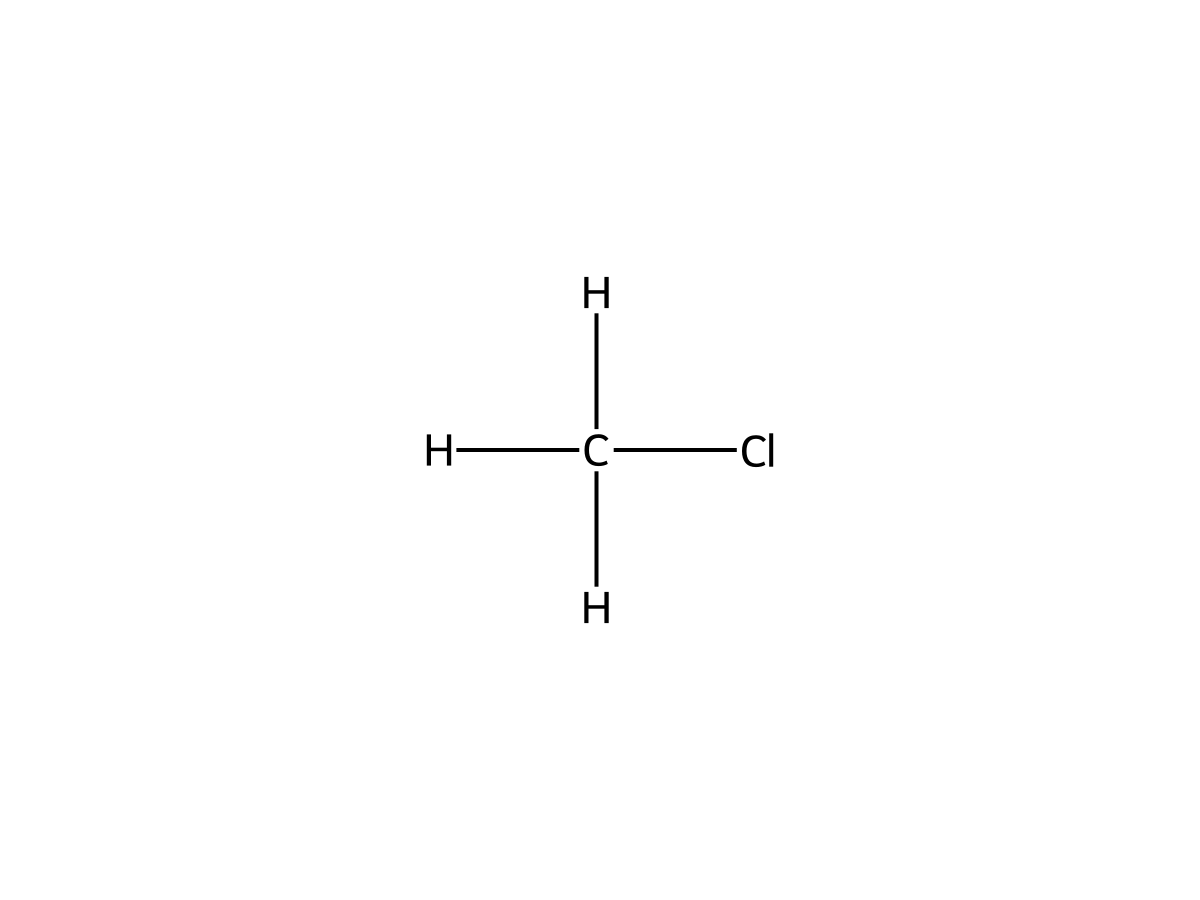
Chemical Properties
Chloromethane is highly volatile and exists as a gas under normal ambient conditions. As a result, it does not typically behave as a conventional LNAPL or DNAPL in the subsurface.
| Property |
Value |
| Chemical Name |
Chloromethane |
| Common Name |
Methyl Chloride |
| Chemical Formula |
CH₃Cl |
| CAS Number |
74-87-3 |
| Molecular Weight |
50.49 g/mol |
| Physical State at Room Temperature |
Gas |
| Boiling Point |
Approximately -24°C |
| Solubility in Water |
Approximately 5,000–7,000 mg/L |
Chloromethane is relatively soluble in water but also has a high vapor pressure, allowing it to readily volatilize from soil and water. ATSDR describes chloromethane as highly soluble in water, highly mobile in soil, and readily volatilized because of its high vapor pressure.
Common Sources of Chloromethane
Chloromethane may be present due to:
- Chemical manufacturing operations
- Silicone manufacturing
- Production of adhesives and sealants
- Historical refrigerant use
- Industrial chemical processing
- Hazardous waste disposal
- Releases from chemical storage or process equipment
- Degradation of dichloromethane, chloroform, and carbon tetrachloride
- Natural sources such as biomass combustion
At chlorinated solvent sites, chloromethane may occur together with carbon tetrachloride, chloroform, and dichloromethane as part of a sequential anaerobic degradation pathway.
Environmental Concerns
Chloromethane is of environmental concern because of its volatility, mobility, and potential to migrate through both groundwater and soil gas.
Under reducing conditions, carbon tetrachloride may undergo sequential dechlorination to chloroform, dichloromethane, and subsequently chloromethane. The appearance of chloromethane during remediation can therefore indicate continued transformation of more highly chlorinated parent compounds.
Because chloromethane is itself a contaminant, treatment performance should be evaluated based on the complete degradation pathway rather than the disappearance of parent compounds alone.
Chloromethane can biodegrade further under appropriate environmental conditions, although degradation rates depend on microbial populations, redox conditions, temperature, and other site-specific factors.
Behavior in Soil and Groundwater
Chloromethane contamination may exist as:
- Dissolved contamination in groundwater
- Vapor-phase contamination within the vadose zone
- Contamination within soil pore water
- A daughter product formed during degradation of more highly chlorinated methanes
Because chloromethane is highly mobile in soil and has limited tendency to bioaccumulate, it may migrate through the subsurface and reach groundwater. ATSDR notes that chloromethane's high soil mobility can allow it to migrate downward into groundwater.
Its high volatility also causes chloromethane to partition readily from contaminated soil and groundwater into soil gas. Vapor migration may therefore be an important consideration where contamination is present beneath or near occupied structures.
ATSDR estimates that chloromethane can persist in groundwater considerably longer than in surface environments, where volatilization may remove it more rapidly.
Human Health Effects
Exposure to elevated concentrations of chloromethane may affect the:
- Central nervous system
- Liver
- Kidneys
- Cardiovascular system
- Reproductive system
Neurological effects are among the most sensitive health endpoints associated with chloromethane exposure. Human case reports involving elevated inhalation exposures have described headache, fatigue, dizziness, impaired coordination, slurred speech, and, at very high concentrations, coma and persistent neurological effects.
Liver effects have also been reported in human and animal studies. Animal studies provide additional evidence of kidney, cardiovascular, reproductive, and developmental effects following sufficiently high exposures.
EPA and the International Agency for Research on Cancer have determined that available evidence is insufficient to classify chloromethane with respect to human carcinogenicity.
Regulatory Standards
Regulatory criteria vary by jurisdiction. The United States Environmental Protection Agency has not established a federal Maximum Contaminant Level (MCL) for chloromethane in drinking water. Chloromethane is not included among EPA's federally regulated primary drinking-water contaminants with an enforceable MCL.
Because no federal MCL exists, site evaluations typically rely on applicable state groundwater standards, risk-based screening levels, vapor intrusion criteria, or other health-based regulatory values.
Many states have established their own groundwater, soil, soil gas, vapor intrusion, and risk-based screening criteria for chloromethane.