
Methyl Tert-Butyl Ether (MTBE)
What is Methyl Tertiary Butyl Ether (MTBE)?
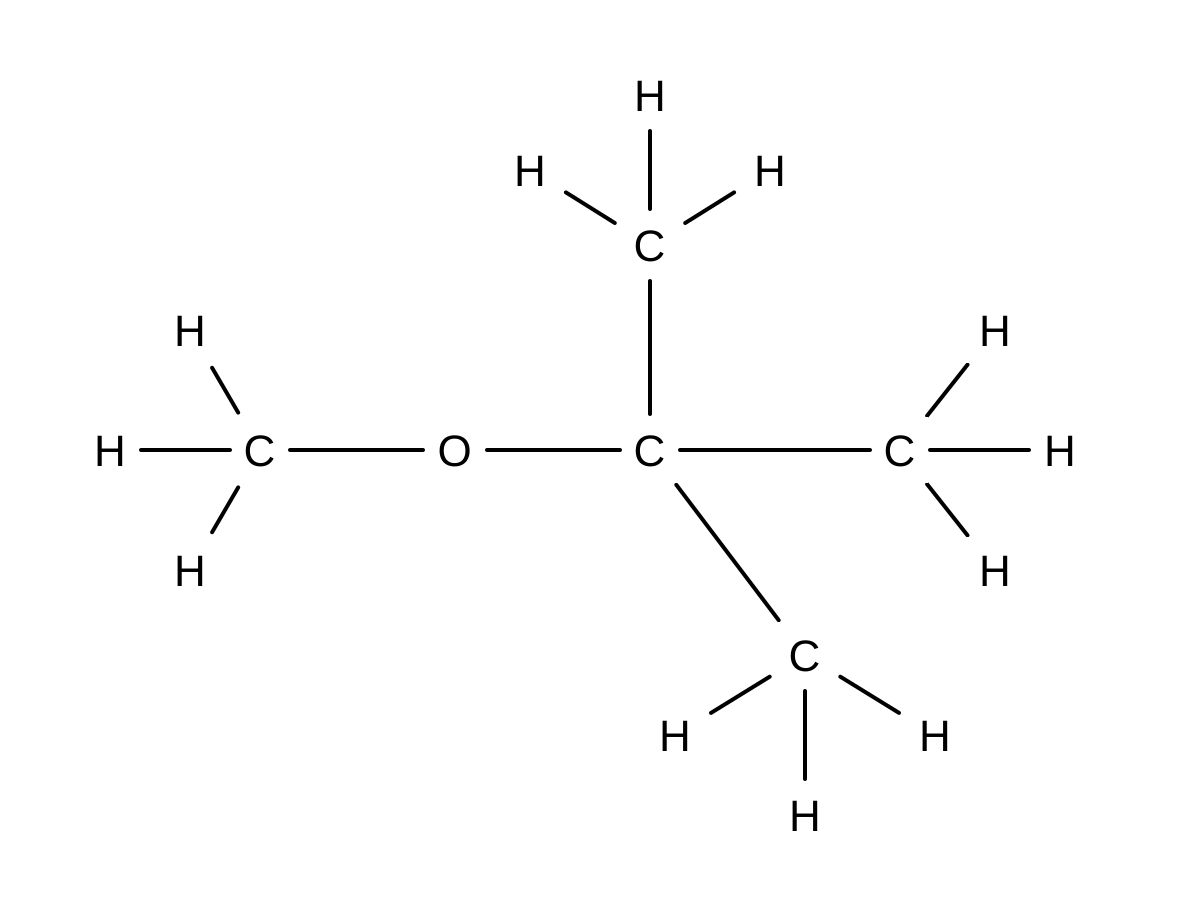
Methyl tert-butyl ether (MTBE) is a volatile organic compound and fuel oxygenate that was formerly widely added to gasoline in the United States to increase octane and promote more efficient combustion.
MTBE use in gasoline increased substantially during the 1980s and 1990s. Because MTBE was blended directly into gasoline, releases from underground storage tanks (USTs), pipelines, fuel terminals, and service stations resulted in widespread detection of MTBE in groundwater at petroleum-contaminated sites.
Unlike benzene, toluene, ethylbenzene, and xylenes (BTEX), MTBE is an ether rather than an aromatic hydrocarbon. Its chemical properties make it considerably more soluble and mobile in groundwater than most petroleum hydrocarbons.
How Tersus Can Help with MTBE
Tersus Environmental provides several technologies that can be used to address MTBE in soil and groundwater. Treatment selection depends on site geochemistry, contaminant distribution, source conditions, and remediation objectives.
Commonly utilized products include:


Chemical Properties
MTBE is lighter than water and, as a pure liquid, is classified as a Light Non-Aqueous Phase Liquid (LNAPL). However, when MTBE is released as a component of gasoline, its high water solubility causes it to readily partition from the petroleum product into groundwater.
|
Property |
Value |
|
Chemical Name |
Methyl tert-Butyl Ether |
|
Common Name |
MTBE |
|
Chemical Formula |
C₅H₁₂O |
|
CAS Number |
1634-04-4 |
|
Molecular Weight |
88.15 g/mol |
|
Density |
Approximately 0.74 g/cm³ |
|
Solubility in Water |
Approximately 42,000–51,000 mg/L at 20–25°C |
Common Sources of MTBE
MTBE may be present due to:
Petroleum releases from underground storage tanks (USTs)
- Gasoline spills and leaks
- Petroleum pipelines
- Fuel terminals and bulk storage facilities
- Refineries and gasoline blending facilities
- Former service stations
- Releases of gasoline historically containing MTBE
- Fuel distribution and transportation operations
At petroleum release sites, MTBE may be present alongside benzene, toluene, ethylbenzene, xylenes, and other gasoline constituents.
Environmental Concerns
MTBE is an important groundwater contaminant because of its high water solubility, low sorption to soil, and relatively slow biodegradation compared with many BTEX compounds.
Once gasoline containing MTBE contacts groundwater, MTBE can rapidly dissolve into the aqueous phase. Because it sorbs only weakly to soil and aquifer materials, dissolved MTBE can migrate at approximately the same velocity as groundwater.
As a result, MTBE may migrate farther from a petroleum source than BTEX compounds and can become the leading edge of a groundwater plume. In some cases, the MTBE plume may become partially or completely separated from the remaining petroleum hydrocarbon plume.
MTBE is biodegradable under certain conditions, particularly where appropriate aerobic microorganisms are present. Anaerobic biodegradation has also been demonstrated under some site conditions; however, degradation is generally slower and less predictable than for BTEX compounds.
Biodegradation of MTBE may produce tertiary butyl alcohol (TBA) as an intermediate. Because TBA may also be mobile and persistent in groundwater, both MTBE and TBA should be considered when evaluating attenuation or remediation performance.
Behavior in Soil and Groundwater
MTBE contamination may exist as:
- A component of free-phase petroleum product (LNAPL)
- Dissolved contamination in groundwater
- Vapor-phase contamination within the vadose zone
- Weakly sorbed contamination associated with soil and aquifer materials
MTBE is much more soluble in water and less strongly sorbed to soil than most BTEX compounds. Consequently, once MTBE enters groundwater, sorption provides relatively little retardation and the contaminant may migrate rapidly downgradient.
MTBE can also separate chromatographically from other gasoline constituents as a plume migrates. Benzene, toluene, ethylbenzene, and xylenes tend to sorb more strongly and generally biodegrade more readily, while MTBE may continue migrating with groundwater.
Because MTBE is volatile, contamination in soil or shallow groundwater may also partition into soil gas and contribute to vapor intrusion concerns where affected groundwater is located beneath or near occupied buildings.
Human Health Effects
Exposure to elevated concentrations of MTBE may affect the:
- Central nervous system
- Liver
- Kidneys
- Respiratory system
- Gastrointestinal system
Short-term exposure to high concentrations may cause dizziness, headache, nausea, vomiting, drowsiness, and impaired coordination.
Studies of longer-term exposure have identified the liver, kidneys, respiratory tract, and other organ systems as potential targets of MTBE toxicity. Much of the available information regarding chronic health effects comes from laboratory animal studies.
Because of these potential health effects, as well as its strong taste and odor at relatively low concentrations, MTBE may be an important contaminant when evaluating groundwater quality and potential drinking-water impacts.
Regulatory Standards
Regulatory criteria vary by jurisdiction. Unlike benzene, toluene, and ethylbenzene, the United States Environmental Protection Agency has not established a federal Maximum Contaminant Level (MCL) for MTBE in drinking water.
EPA has established a drinking-water advisory recommending that MTBE concentrations be maintained at approximately 20 to 40 µg/L or below. This advisory is based primarily on taste and odor acceptability rather than an enforceable federal drinking-water standard.
Many states have established their own drinking-water standards, groundwater criteria, cleanup levels, or action levels for MTBE. Therefore, applicable state-specific regulatory requirements should be reviewed when evaluating MTBE-impacted sites.
Frequently Asked Questions
What is MTBE commonly used for?
MTBE was widely used as a gasoline oxygenate and octane enhancer. Its use increased substantially in the United States during the 1980s and 1990s before concerns regarding groundwater contamination led many states to restrict or discontinue its use.
Why is MTBE difficult to remediate?
MTBE is highly soluble in water, sorbs only weakly to soil and aquifer materials, and can migrate rapidly with groundwater. It also tends to biodegrade less readily than many BTEX compounds, allowing MTBE plumes to extend farther downgradient from petroleum source areas.
Can MTBE biodegrade naturally?
Yes. MTBE can biodegrade under appropriate conditions, particularly under aerobic conditions. However, degradation rates vary substantially among sites and depend on microbial populations, dissolved oxygen, nutrients, temperature, and other environmental conditions.
What is the relationship between MTBE and TBA?
Tertiary butyl alcohol (TBA) may occur as a gasoline constituent and can also form during the biodegradation of MTBE. As MTBE concentrations decrease, TBA concentrations may temporarily increase, so both compounds should be monitored when evaluating biodegradation.
How is MTBE removed from groundwater?
Common remediation approaches include enhanced aerobic bioremediation, bioaugmentation, chemical oxidation, air sparging, soil vapor extraction, groundwater extraction and treatment, and petroleum source-area treatment.
Can MTBE travel farther than BTEX compounds?
Yes. Because MTBE is highly soluble and weakly sorbed, it can migrate more readily with groundwater than benzene, toluene, ethylbenzene, and xylenes. MTBE may therefore occur at the leading edge of a petroleum groundwater plume.
Related Contaminants
- Tertiary Butyl Alcohol (TBA)
- tert-Butyl Formate (TBF)
- Benzene
- Toluene
- Ethylbenzene
- Xylenes
- tert-Amyl Methyl Ether (TAME)
- Ethyl tert-Butyl Ether (ETBE)
