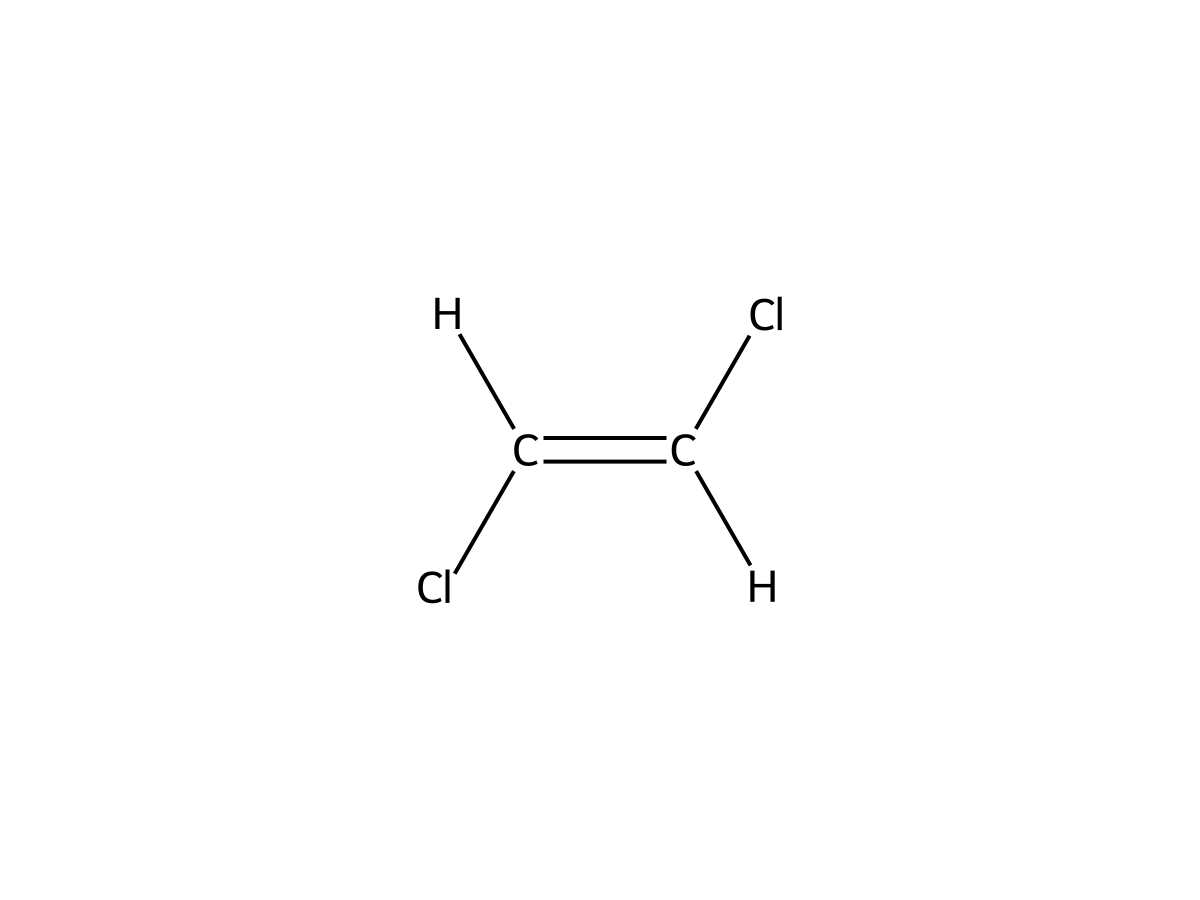
Chemical Properties
trans-1,2-Dichloroethene is denser than water and, when present as a separate liquid phase, is classified as a Dense Non-Aqueous Phase Liquid (DNAPL). It is also relatively volatile and moderately soluble in water.
| Property |
Value |
| Chemical Name |
trans-1,2-Dichloroethene |
| Common Name |
trans-1,2-DCE |
| Chemical Formula |
C₂H₂Cl₂ |
| CAS Number |
156-60-5 |
| Molecular Weight |
96.94 g/mol |
| Density |
Approximately 1.26 g/cm³ at 20°C |
| Solubility in Water |
Approximately 4,500–5,300 mg/L at 20–25°C |
EPA and PubChem report a density of approximately 1.2565 g/cm³ at 20°C, while recent EPA-reviewed water-solubility data are approximately 4,500 to 5,300 mg/L depending on the test method and temperature.
Common Sources of trans-1,2-Dichloroethene
trans-1,2-Dichloroethene may be present due to:
- Industrial solvent use
- Cleaning and degreasing operations
- Chemical manufacturing
- Production of other chlorinated solvents
- Hazardous waste disposal
- Releases from chemical storage tanks or process equipment
- Anaerobic degradation of trichloroethene (TCE)
- Anaerobic degradation of tetrachloroethene (PCE)
At many chlorinated solvent sites, trans-1,2-DCE is encountered together with PCE, TCE, cis-1,2-DCE, vinyl chloride, and other chlorinated ethenes.
Environmental Concerns
trans-1,2-Dichloroethene is of environmental concern because it is volatile, mobile in groundwater, and may occur as both a primary contaminant and a daughter product of more highly chlorinated solvents.
During reductive dechlorination, PCE and TCE may be transformed through dichloroethene intermediates. trans-1,2-DCE may therefore appear within a groundwater plume as degradation progresses.
Under sufficiently reducing conditions and in the presence of appropriate microorganisms, trans-1,2-DCE may undergo further reductive dechlorination to vinyl chloride and ultimately to ethene.
Because vinyl chloride is more toxic and has a lower drinking-water standard than trans-1,2-DCE, remediation programs should evaluate the entire degradation pathway rather than relying only on reductions in parent-compound concentrations.
Behavior in Soil and Groundwater
trans-1,2-Dichloroethene contamination may exist as:
- Separate-phase DNAPL
- Dissolved contamination in groundwater
- Sorbed contamination associated with soil and aquifer materials
- Vapor-phase contamination within the vadose zone
- A daughter product formed during degradation of PCE and TCE
EPA describes trans-1,2-DCE as moderately mobile in soil, with limited adsorption to soil and sediment. Once dissolved, it can migrate with groundwater and may contribute to chlorinated-solvent plumes beyond the original source area.
trans-1,2-DCE is also highly volatile. In surface water and shallow soil, volatilization can be an important removal mechanism. Where contaminated groundwater or soil is present beneath occupied structures, partitioning into soil gas may create potential vapor intrusion concerns.
Human Health Effects
Exposure to elevated concentrations of trans-1,2-Dichloroethene may affect the:
- Central nervous system
- Liver
- Circulatory system
- Immune system
At high concentrations, dichloroethenes can produce anesthetic and central nervous system effects. EPA information indicates that the trans isomer can depress the central nervous system and that high or repeated exposures in laboratory studies have produced effects involving the liver, circulatory system, and immune system.
Short-term exposure to sufficiently high vapor concentrations may cause dizziness, drowsiness, impaired coordination, or other central nervous system effects.
Regulatory Standards
Regulatory criteria vary by jurisdiction; however, the United States Environmental Protection Agency has established a Maximum Contaminant Level (MCL) for trans-1,2-dichloroethene in drinking water of 0.1 mg/L (100 µg/L).
EPA has also established an MCL Goal (MCLG) of 0.1 mg/L (100 µg/L). The drinking-water standard is intended to protect against potential effects involving the liver, circulatory system, and nervous system.
Many states have additional groundwater, soil, soil gas, vapor intrusion, and risk-based screening criteria for trans-1,2-dichloroethene.