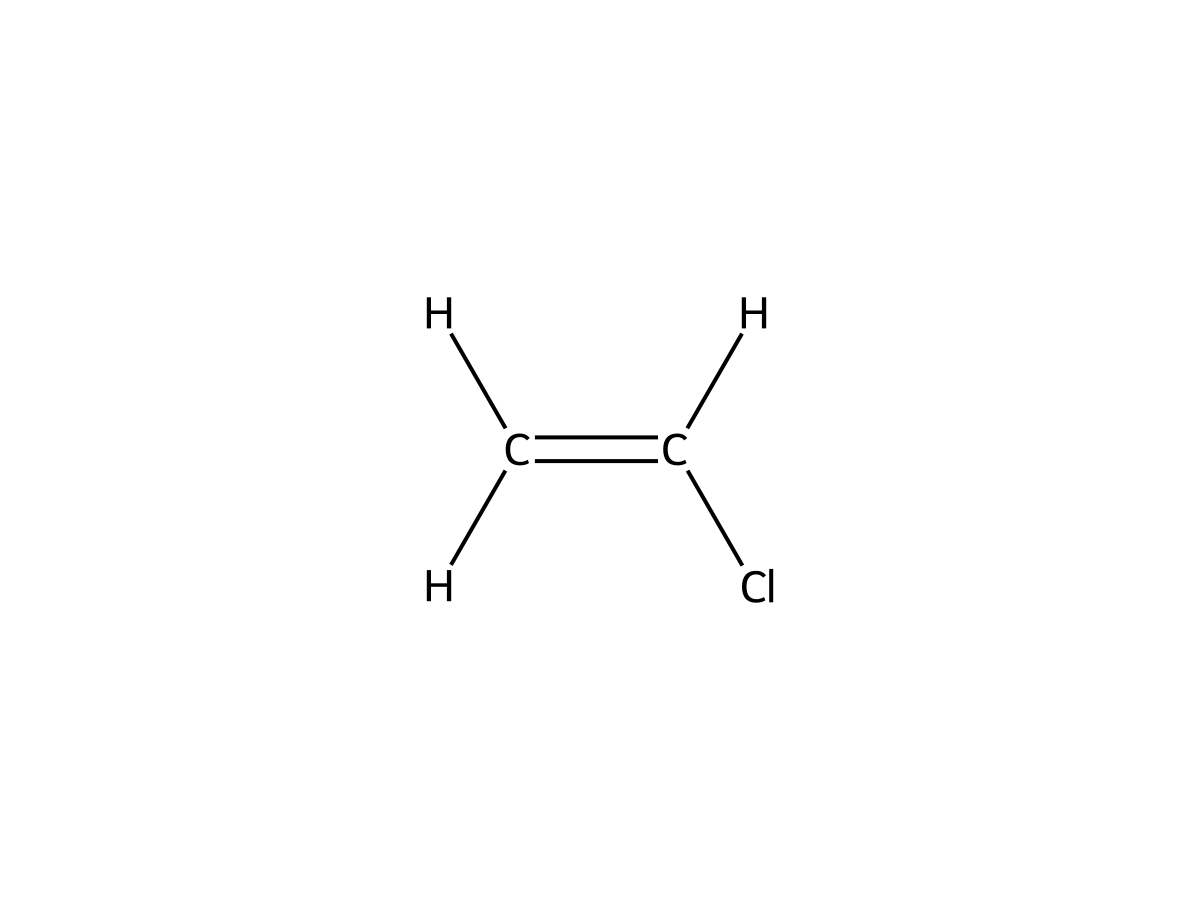
Chemical Properties
| Property |
Value |
| Chemical Name |
Chloroethene |
| Common Name |
Vinyl Chloride (VC) |
| Chemical Formula |
C₂H₃Cl |
| CAS Number |
75-01-4 |
| Molecular Weight |
62.50 g/mol |
| Density |
Gas at ambient conditions |
| Solubility in Water |
Approximately 2,700 mg/L at 25°C |
Because vinyl chloride is highly volatile, it readily partitions from groundwater into soil gas and can pose vapor intrusion risks to overlying buildings.
Common Sources of Vinyl Chloride
Vinyl chloride may be present due to:
- Biological degradation of PCE
- Biological degradation of TCE
- Biological degradation of cis-DCE
- Historical PVC manufacturing operations
- Industrial chemical production facilities
At most remediation sites, vinyl chloride is encountered as a daughter product resulting from reductive dechlorination of chlorinated solvents.
Environmental Concerns
Vinyl chloride is often considered one of the most significant chlorinated solvent contaminants because it is more toxic than many of its parent compounds.
Vinyl chloride is typically formed through the following degradation pathway:
- Perchloroethylene (PCE)
- Trichloroethylene (TCE)
- cis-1,2-Dichloroethylene (cis-DCE)
- Vinyl Chloride (VC)
- Ethene (the desired non-toxic end product)
The presence of vinyl chloride may indicate that reductive dechlorination is occurring; however, elevated vinyl chloride concentrations can also indicate that biodegradation has stalled before reaching complete detoxification.
Because vinyl chloride is highly volatile, it is also a common vapor intrusion concern.
Behavior in Soil and Groundwater
Vinyl chloride behaves differently than PCE and TCE because it does not typically exist as a Dense Non-Aqueous Phase Liquid (DNAPL).
Instead, vinyl chloride is generally encountered as:
- Dissolved contamination in groundwater
- Vapor-phase contamination within soil gas
- A degradation product of other chlorinated solvents
Due to its volatility and mobility, vinyl chloride plumes can migrate beyond source areas and may require evaluation of both groundwater and vapor intrusion pathways.
Human Health Effects
Exposure to elevated concentrations of vinyl chloride may affect the:
- Central nervous system
- Liver
- Immune system
Long-term exposure has been associated with increased cancer risk. Vinyl chloride is classified as a known human carcinogen and is subject to stringent regulatory standards.
Because of its toxicity, vinyl chloride frequently becomes the primary contaminant of concern during risk assessments and remedial decision-making.
Regulatory Standards
Regulatory criteria vary by jurisdiction; however, the United States Environmental Protection Agency has established a Maximum Contaminant Level (MCL) for vinyl chloride in drinking water of 2 µg/L.
Many states have additional groundwater, soil gas, indoor air, vapor intrusion, and risk-based screening criteria.
Because of its carcinogenicity and volatility, vapor intrusion screening levels are often particularly stringent.
Frequently Asked Questions
Is vinyl chloride more toxic than PCE or TCE?
Yes. Vinyl chloride is generally considered more toxic than its parent compounds and is classified as a known human carcinogen.
Is vinyl chloride a DNAPL?
No. Vinyl chloride is a gas at ambient conditions and is not classified as a Dense Non-Aqueous Phase Liquid (DNAPL).
Why is vinyl chloride found at remediation sites?
Vinyl chloride is commonly formed during the biological degradation of PCE, TCE, and cis-DCE through reductive dechlorination.
How is vinyl chloride removed from groundwater?
Common remediation approaches include enhanced reductive dechlorination, bioaugmentation, in situ chemical reduction, source treatment, and vapor intrusion mitigation where necessary.
Related Contaminants