
Cyanocobalamin (Vitamin B12 USP)
Micronutrient Supplement for Anaerobic Bioremediation|
Product Overview
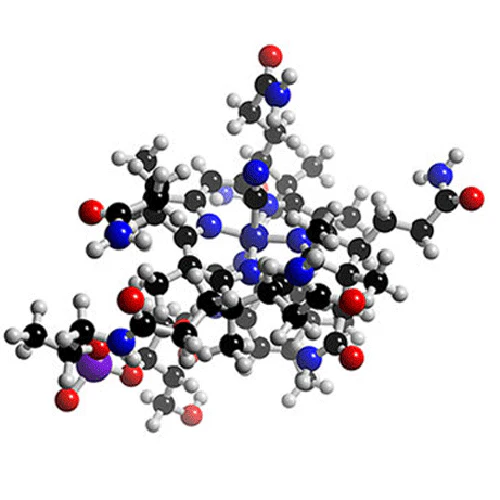
Cyanocobalamin (Vitamin B12 USP) is a cobalt-containing micronutrient required for the metabolic activity and growth of Dehalococcoides (Dhc) and other organohalide-respiring bacteria involved in anaerobic reductive dechlorination. Vitamin B12 functions as a transition-metal coenzyme that enables key enzymatic reactions necessary for complete dechlorination of chlorinated solvents.
Vitamin B12 is not typically present in simple electron donor substrates such as emulsified vegetable oil (EVO) and is often present at insufficient concentrations in generic micronutrient blends. To address this limitation and provide flexibility during field implementation, Tersus offers USP-grade Cyanocobalamin in convenient packaging suitable for site-specific dosing.
Technical Basis
Role of Vitamin B12 in Reductive Dechlorination
Cyanocobalamin provides the cobalt-containing corrinoid structure required for reductive dehalogenase enzymes used by Dehalococcoides species. These enzymes catalyze the sequential reduction of chlorinated ethenes to ethene.
Published literature indicates that optimal dechlorination rates and microbial growth occur at Vitamin B12 concentrations ranging from approximately 25 to 50 µg/L (Stroo et al., 2013). Concentrations below this range may limit microbial activity even when sufficient electron donor and bioaugmentation cultures are present.
Targeted Supplementation
Because Vitamin B12 demand is site-specific and dependent on microbial populations, electron donor loading, and treatment objectives, targeted supplementation allows practitioners to:
- Address micronutrient limitations without over-application
- Adjust dosing in the field
- Support bioaugmentation performance
Applications
Cyanocobalamin (Vitamin B12 USP) is used as a micronutrient supplement in anaerobic remediation systems.
Typical applications include:
- Support of Dehalococcoides-based bioaugmentation
- Enhancement of reductive dechlorination performance
- Supplementation during startup or rebound treatment phases
- Use alongside electron donor substrates and cultures
Vitamin B12 may be added independently or in combination with other amendments depending on site-specific requirements.
Integration with Tersus Technologies
Cyanocobalamin (Vitamin B12 USP) is commonly used in conjunction with Tersus remediation platforms, including:
- EDS-Advanced™ catalyzed reductive bioremediation
- EDS-ER™, EDS-QR™, and EDS-ME™ electron donor systems
- Commercial bioaugmentation cultures requiring corrinoid cofactors
Vitamin B12 supplementation provides an additional layer of control to ensure that micronutrient availability does not limit treatment performance once reducing conditions are established.
Features & Benefits
Features
- USP-grade cyanocobalamin
- ≥96% assay (dry basis)
- Water soluble
- Non-hazardous under GHS classification
-
Packaged for flexible field dosing
Benefits
- Supports complete reductive dechlorination
- Enhances bioaugmentation effectiveness
- Addresses cobalt and corrinoid limitations
- Enables site-specific micronutrient control
- Compatible with common remediation amendments
Typical Application
Vitamin B12 is typically dissolved in water and injected into the subsurface via wells or direct-push points. Application rates are site-specific and are based on microbial requirements, treatment objectives, and target Vitamin B12 concentrations. Application rates and dilution ratios are site-specific and determined based on contaminant concentrations and site conditions.
Physical & Chemical Properties
- Chemical Name: Cyanocobalamin (Vitamin B12)
- CAS Number: 68-19-9
- Molecular Formula: C₆₃H₈₈CoN₁₄O₁₄P
- Molecular Weight: 1,355.38 g/mol
- Assay (dry basis): 96.00% – 100.50%
- Physical State: Solid
- Appearance: Dark red
- Melting Point: ~300 °C (572 °F)
- Solubility:
- Water: soluble (up to ~50 mg/mL)
- DMSO: soluble (up to ~75 mg/mL at 25 °C)
- Ethanol: soluble (up to ~10 mg/mL at 25 °C)
Refer to the Safety Data Sheet (SDS) for complete compositional, handling, and hazard information.
Storage and Transport
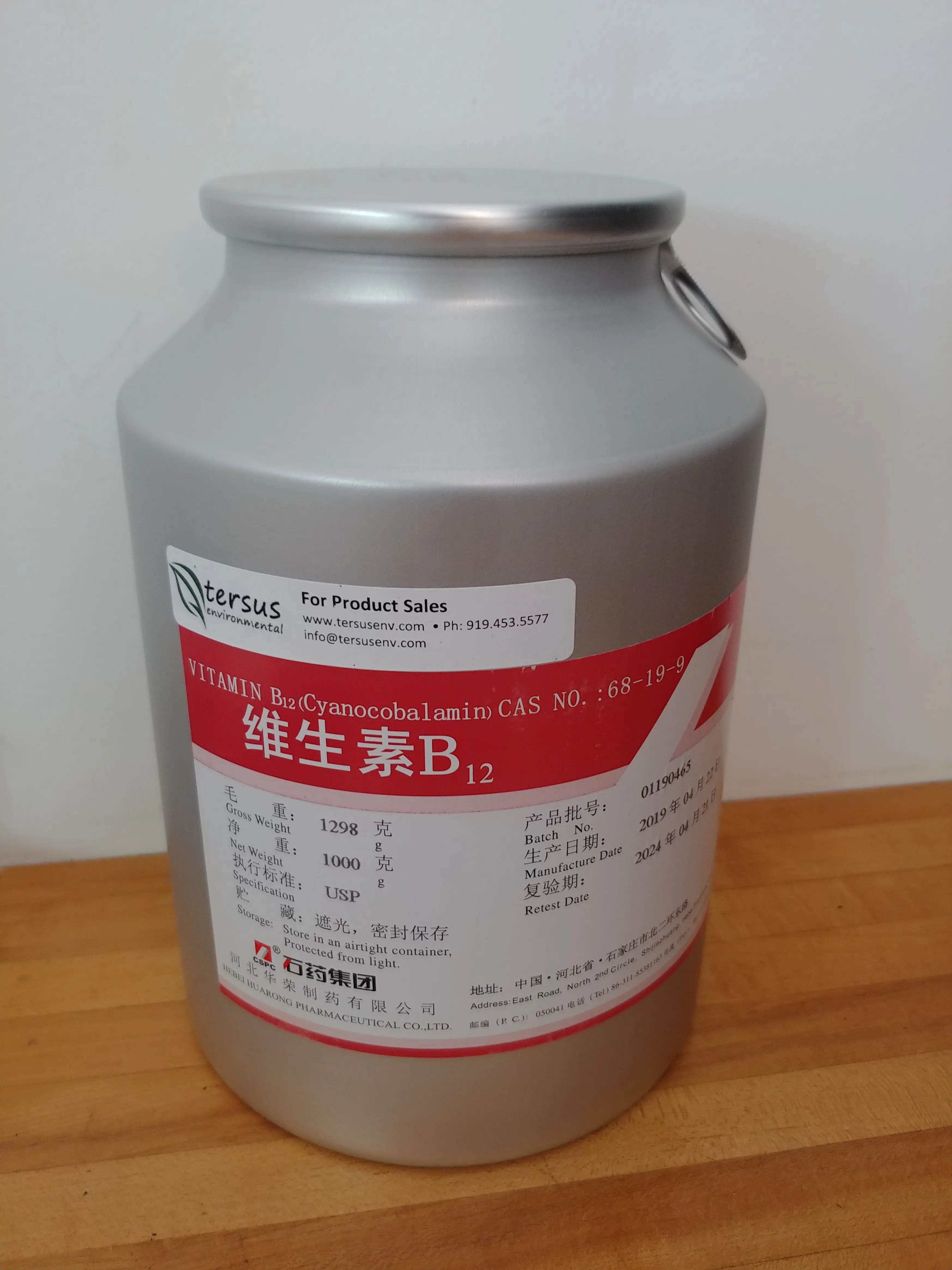
Cyanocobalamin (Vitamin B12 USP) should be stored in a cool, dry, well-ventilated area, protected from light and moisture. The product is not regulated as a hazardous material for transportation. Refer to the SDS for detailed storage and handling guidance.
Packaging
Cyanocobalamin (Vitamin B12 USP) is available in:
- 100-gram bags
- 1-kilogram tins (example packaging shown in photo)
Packaging options provide flexibility for pilot testing, full-scale applications, and field adjustments.
Reference
Stroo, H.F., Leeson, A., & Ward, C.H. (2013). Bioaugmentation for Groundwater Remediation. HydroGeoLogic, Inc., Ashland, OR, USA.
